July 16, 2026·4 min read
Prototyping Interactive Exhibits Without Technical Teams

Key Takeaways
- The idea is never the bottleneck—turning it into something people can stand in front of and try is.
- A prototype for a physical, interactive experience is working software on real hardware, not a wireframe.
- The people closest to the content are usually the furthest from the tool that builds it.
- When every iteration needs a developer, teams ration feedback instead of acting on it.
- Zibit lets non-technical teams build, test on real displays, and adjust on the spot—making iteration effectively free.
Ask anyone who's tried to prototype an interactive exhibit and they'll tell you the idea was never the hard part. A curator, educator, or marketer can sketch a concept in an afternoon. Getting it into a state where anyone can actually stand in front of it and try it? That's where things stall.
The idea and the working prototype live in different worlds
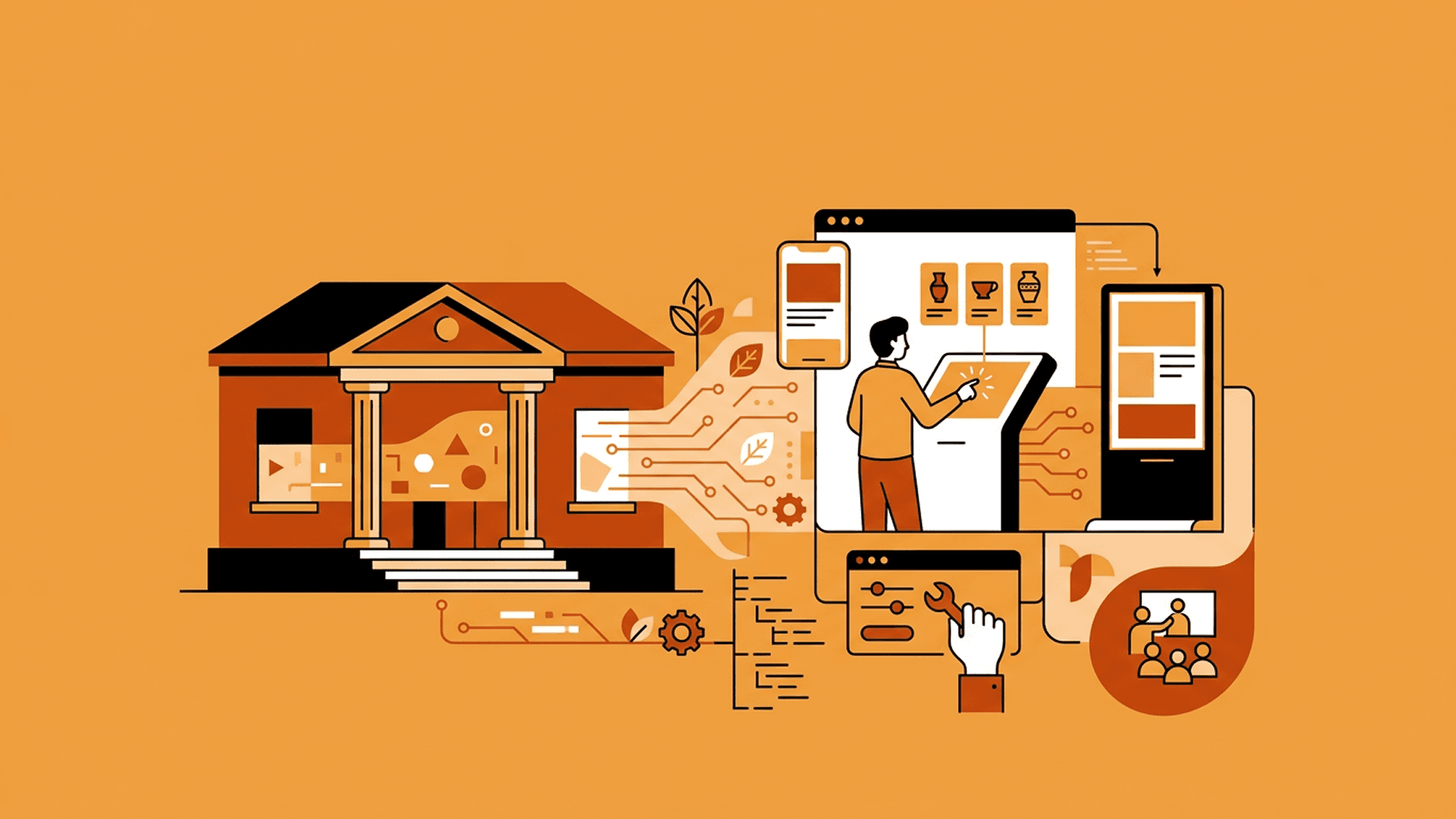
The core problem is that a prototype for a physical, interactive experience isn't like a prototype for a website or an app. You can't just wireframe it and call it close enough. People need to touch it, walk up to it, trigger it with their body or their hand, and see how it behaves on the actual displays it'll live on. It's a working piece of software running on real hardware in a real space.
And that's exactly the part non-technical teams can't do on their own. The moment an idea needs to become something functional, it needs a developer. Which means weeks or months later the concept becomes reality after extensive development has already been done to bring it to life—and the original spark of the idea has cooled.
In a healthy prototyping process, you want to test early and often: show something rough, watch how people actually interact with it, adjust, show it again. That loop is what turns a mediocre idea into a great one.
A design that looks perfect on a laptop screen can behave completely differently on the touchscreen it's actually meant for—different resolution, different aspect ratio, different touch sensitivity, different lighting in the room. Non-technical teams usually don't find this out until the exhibit team ships something to be installed and tested on-site, at which point fixing it means going back to the same development queue that created the delay in the first place.
The people closest to the content have the least ability to shape the build
This is the part that stings the most. The people who understand the audience, the story, and the learning goals best—the curators, educators, and exhibit designers—are usually the furthest removed from the tool that actually builds the thing. They can describe what they want, but they can't touch it, adjust it, or test a hunch themselves. Every insight has to be translated into a ticket, handed to someone else, and hoped it comes back close to what was meant.
"When iteration is free, teams iterate more. When the people closest to the content can shape the build directly, the gap between 'what we meant' and 'what we shipped' gets smaller."
But when every iteration requires a developer to make a code change, that loop gets expensive fast. Non-technical teams end up rationing their feedback instead of acting on it—saving up a list of changes instead of testing one idea at a time—because every request competes for the same limited time or budget. The result is prototypes that get one or two rounds of real testing instead of ten, and exhibits that ship with untested assumptions from the start.
How Zibit changes the game
Zibit gives non-technical teams the ability to build and adjust real, working interactive exhibits themselves, without waiting on a developer for every change. Instead of a prototype that takes a development cycle to produce and another to revise, a curator or educator can build it, test it on the actual display it's meant for, and adjust it on the spot. They can even iterate with real users, trying out new solutions on the fly.
That changes the entire economics of prototyping. When iteration is free, teams iterate more. When the people closest to the content can shape the build directly, the gap between "what we meant" and "what we shipped" gets smaller. And when testing on real hardware doesn't require a developer standing next to you, the surprises that used to show up during installation get caught earlier when they're cheap and easy to fix.
Prototyping interactive exhibits was hard because it required a technical team to stand between every idea and its test. Zibit exists to remove that requirement and get exhibit teams back to spending their time on the work only they can do: understanding their audience and building something worthy of their time and attention.
Quick answers
Can non-technical teams prototype an interactive exhibit?
Yes. With a no-code tool like Zibit, a curator or educator can build a working prototype, test it on the actual display, and adjust it on the spot without waiting on a developer.
Why is prototyping a physical interactive harder than prototyping a website?
A physical interactive has to run on real hardware in a real space—people need to touch it and see how it behaves on the actual displays, which a wireframe can't stand in for.
How does no-code software change the cost of iterating on an exhibit?
When every change needs a developer, teams ration feedback. When iteration is free, teams iterate more—and the gap between what was meant and what shipped gets smaller.
Do exhibit prototypes need to run on real hardware?
Yes. A design that looks perfect on a laptop can behave differently on a touchscreen—different resolution, aspect ratio, touch sensitivity, and lighting—so testing on the real display catches surprises before install day.